Terminal
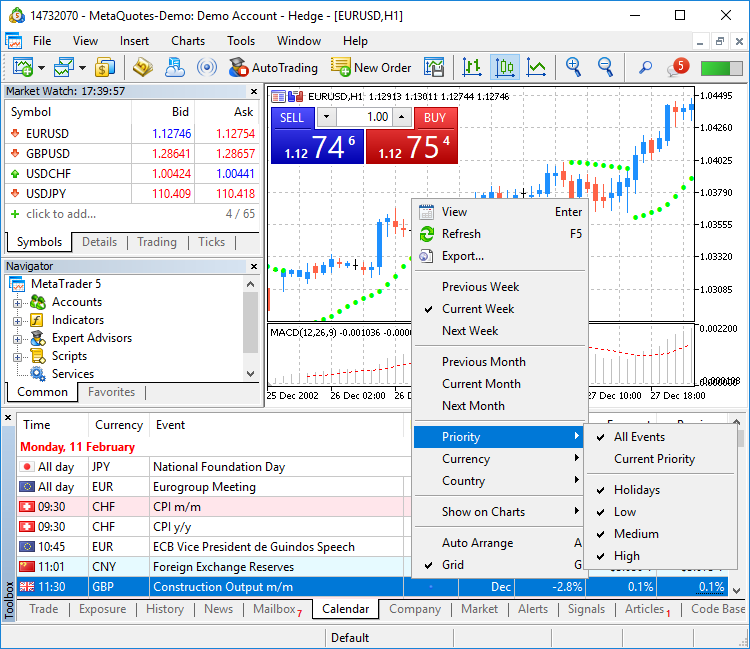
- Completely revised built-in Economic Calendar.
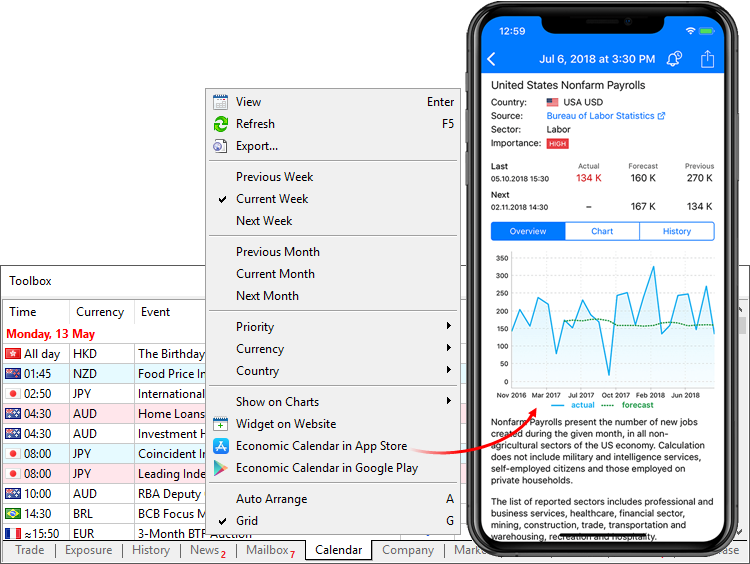
The Economic Calendar is our proprietary solution. Therein you will find over 600 financial news and indicators related to the 13 largest global economies: USA, European Union, Japan, UK, Canada, Australia, China among others. Relevant data is collected from open sources in real time.
The new version features updated contents and advanced event filters: by time, priority, currencies and countries.
The calendar data can now be accessed from MQL5 programs. Please see below for details.

- Added new type of MQL5 applications — Services. This new type enables the creation of custom price feeds for the terminal, i.e. to implement price delivery from external systems in real time, just like it is implemented on brokers' trade servers.
Unlike Expert Advisors, indicators and scripts, services are not linked to a specific chart. Such applications run in the background and are launched automatically when the terminal is started (unless such an app was forcibly stopped).
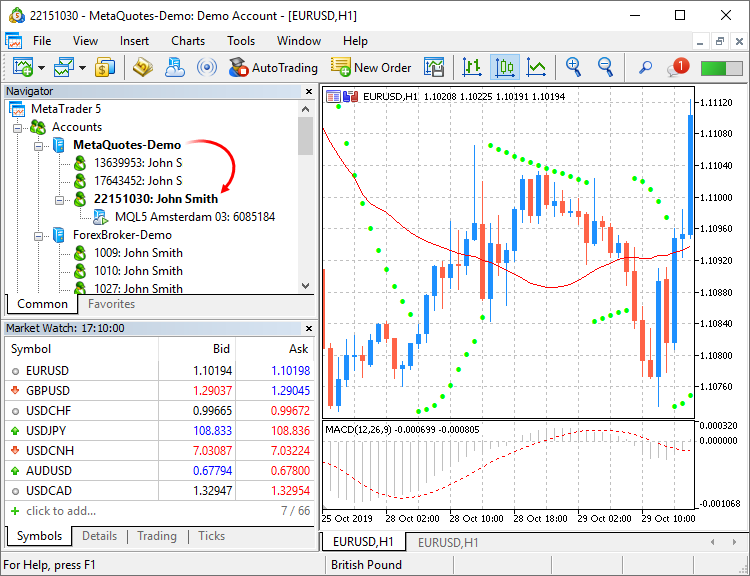
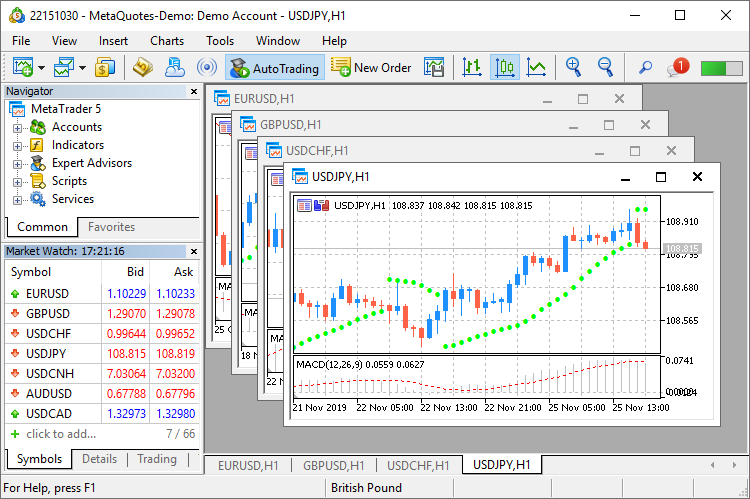
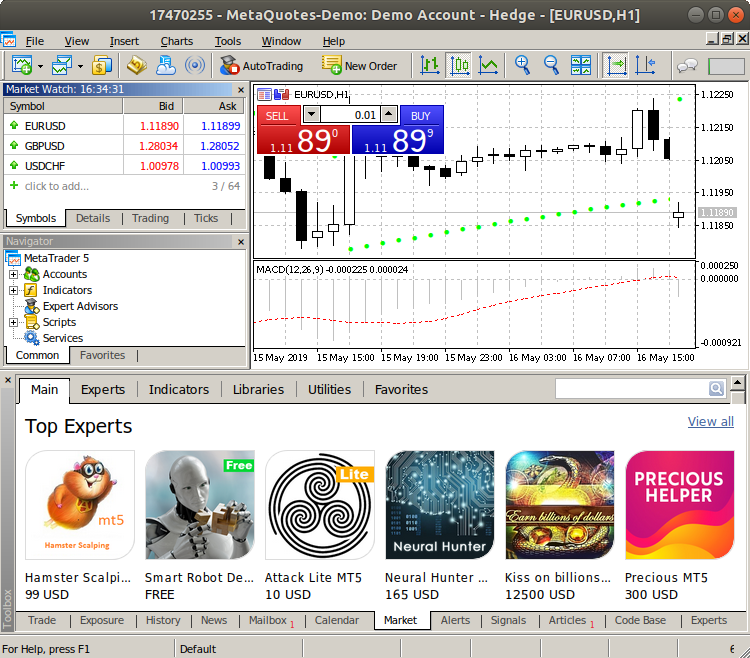
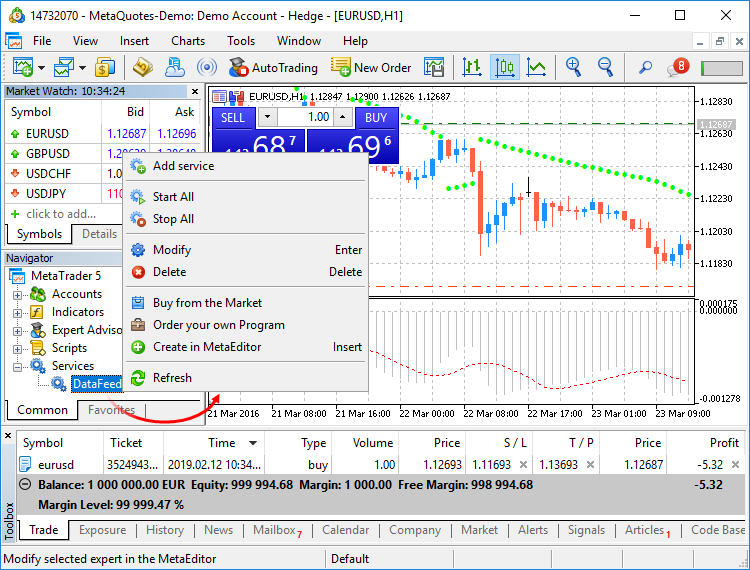
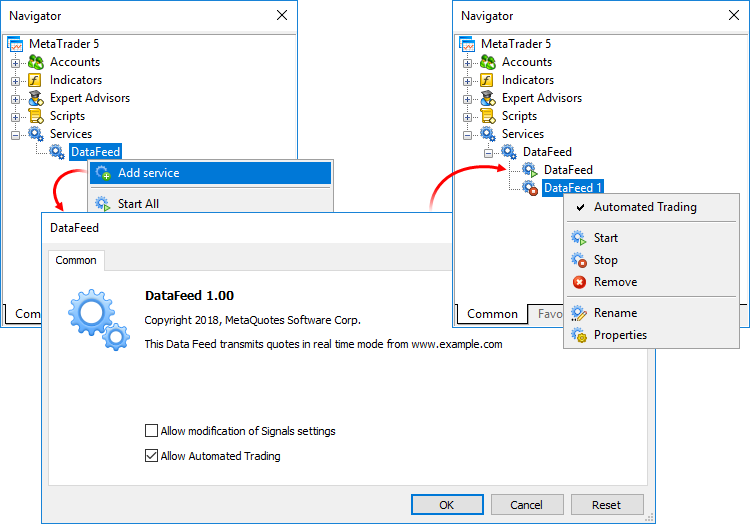
Services can be managed from a new section within the Navigator window:

How to create services
To create a service template, use the corresponding MQL5 Wizard option. Services have one OnStart entry point, similar to scripts. At this point, you can implement an endless data receiving and handling cycle using network functions.
How to launch services
To run multiple Expert Advisor or indicator copies with different parameters, you should launch them on different charts. In this case different program instances are created, which then operate independently. Services are not linked to charts, therefore a special mechanism has been implemented for the creation of service instances.
Select a service from the Navigator and click "Add service" in its context menu. This will open a standard MQL5 program dialog, in which you can enable/disable trading and access to signal settings, as well as set various parameters.
A service instance can be launched and stopped using the appropriate instance menu. To manage all instances, use the service menu.

- A learning program has been added.
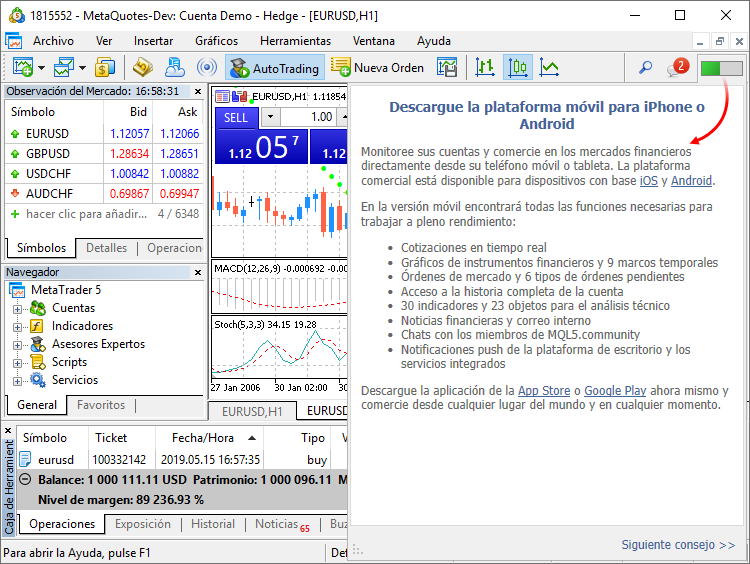
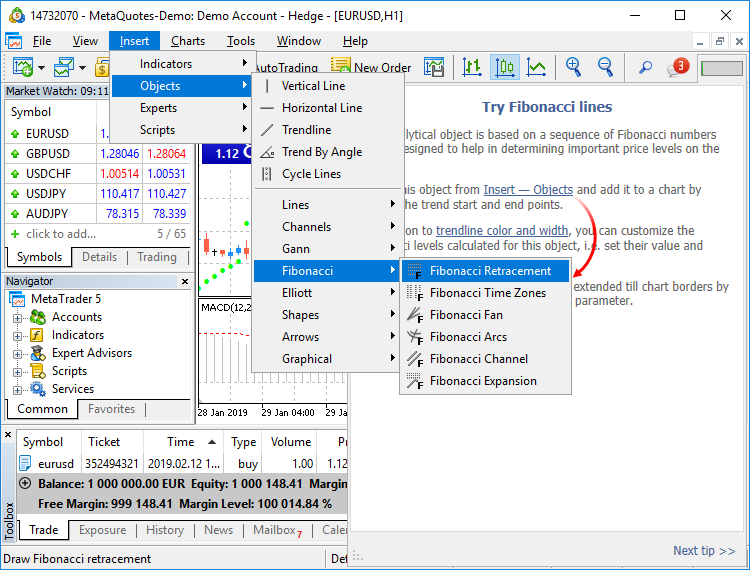
The new feature will help beginners in learning how to interact with the platform. We have added over 100 interactive tips concerning the main platform features.
- Tips are seamlessly displayed as a progress bar on the toolbar and thus they do not distract the user.
- Tips only appear for the actions which you have never performed in the platform.
- All tips include interactive links, by which you can navigate to the relevant interface elements. For example, a trading dialog or a menu with the desired program can be launched straight from the tip.

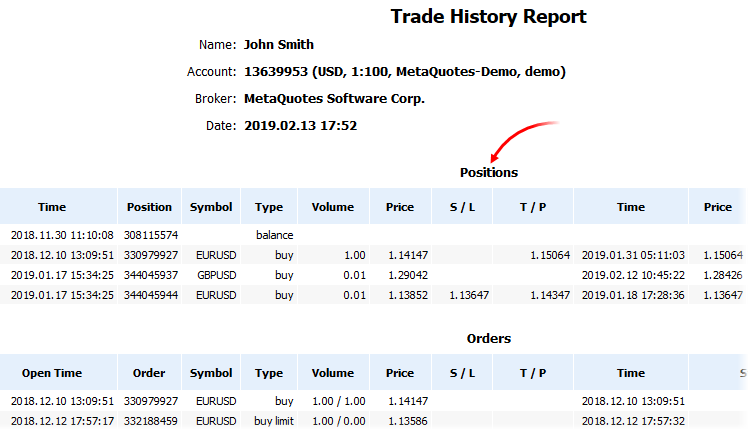
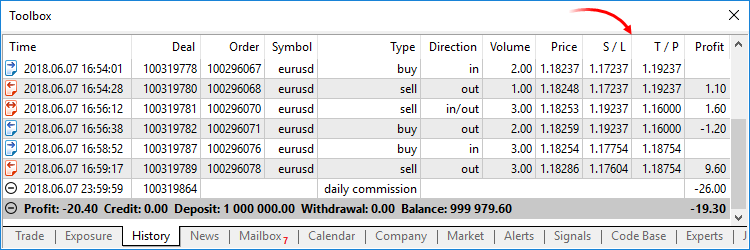
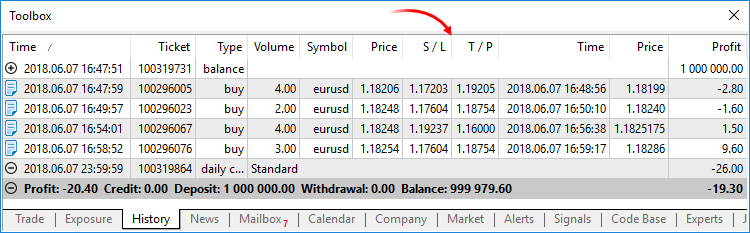
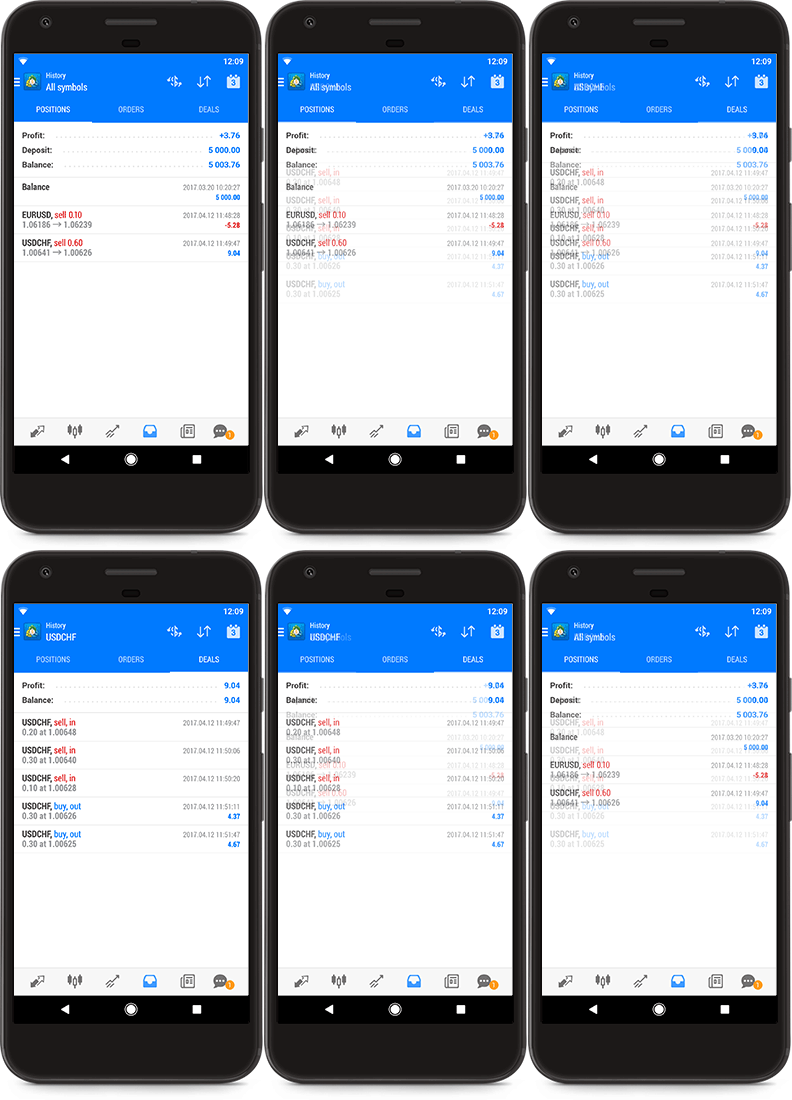
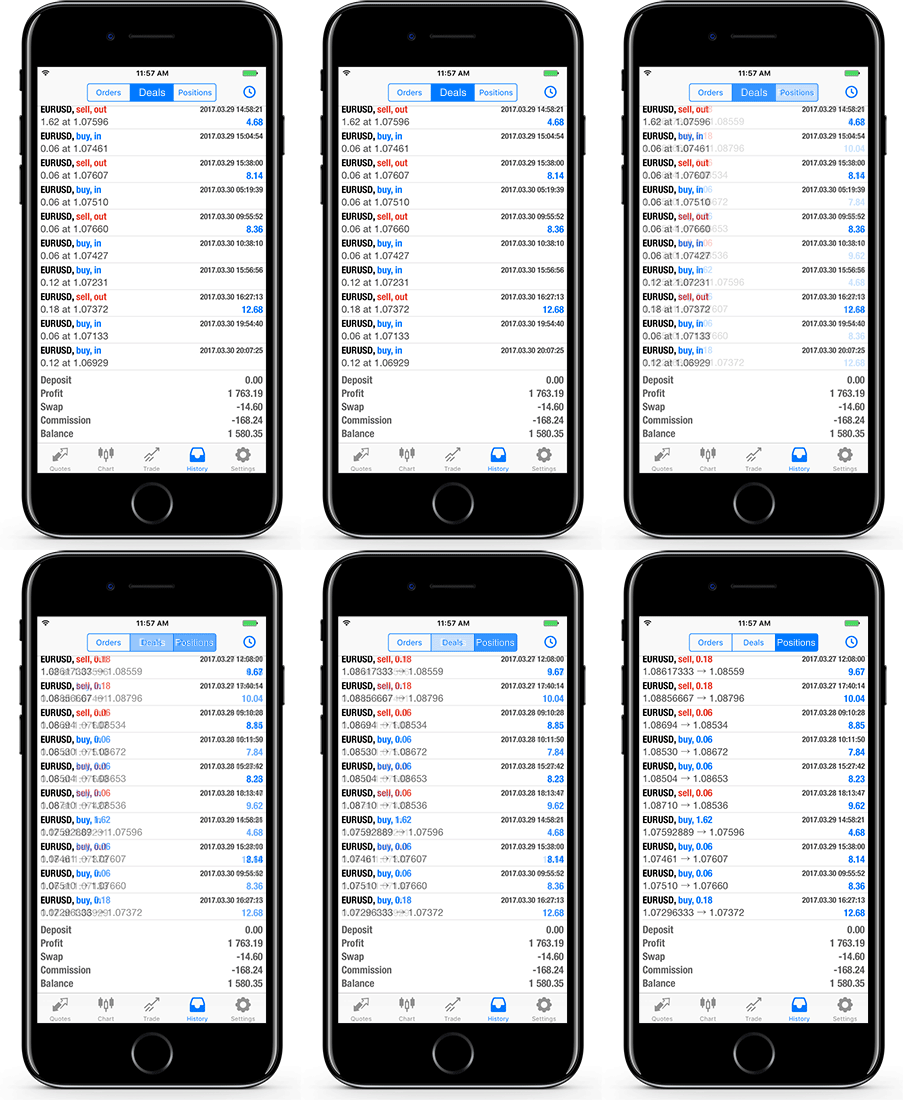
- The trading account history can be presented as positions. The platform collects data on deals related to the position (opening, volume increase, partial or full closing) and groups the information into a single record. Thus you can access position details: open and close time, volume, price and result. This efficient presentation form is now available in history reports exported to files.

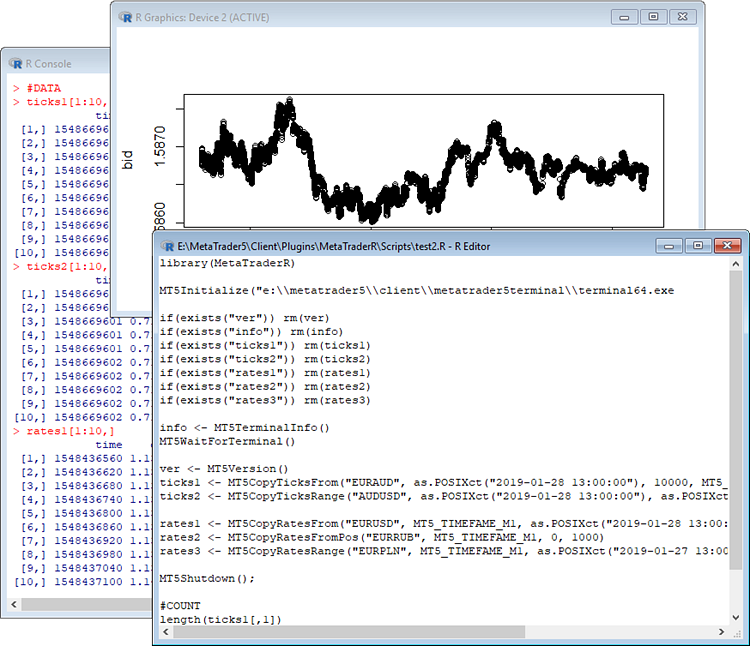
- Added new API enabling request of MetaTrader 5 terminal data through applications using the R language.
We have prepared a special MetaTrader package. It contains DLL for interactions between R and the MetaTrader 5 terminal, documentation and auxiliary r files. We are completing the package registration in the CRAN repository, after which it will be available for download and installation.

The package can be installed using a special command:
R CMD INSTALL --build MetaTrader
The following commands related to data request are available:
- MT5Initialize initializes and establishes connection with the MetaTrader 5 terminal. If necessary, the terminal is launched during command execution.
- MT5Shutdown de-initializes and disconnects from MetaTrader 5.
- MT5Version gets the MetaTrader 5 terminal version.
- MT5TerminalInfo gets the state and parameters of terminal connection to a broker's server (account number and server address).
- MT5WaitTerminal waits for the MetaTrader 5 terminal to connect to a broker's server.
- MT5CopyTicksFrom(symbol, from, count, flags) copies the specified number of ticks starting from the specified date. The date is specified in milliseconds since 01.01.1970.
- MT5CopyTicksRange(symbol, from, to, flags) copies ticks from within the specified period. The dates are specified in milliseconds since 01.01.1970.
- MT5CopyRatesFrom(symbol, timeframe, from, count) copies the specified number of one-minute bars starting from the specified date. The date is specified in seconds since 01.01.1970.
- MT5CopyRatesFromPos(symbol, timeframe, start_pos, count) copies one-minute bars from the specified position relative to the last bar.
- MT5CopyRatesFromRange(symbol, timeframe, date_from, date_to) copies bars from within the specified period. The dates are specified in seconds since 01.01.1970.
The list of supported commands will be further expanded.
- Optimized Close By dialog used for closing a position by an opposite one. Now, the dialog is not slowed down even if you have a large number of open positions.
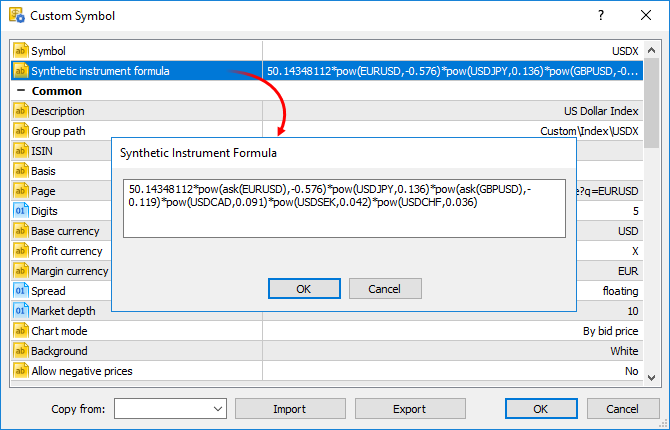
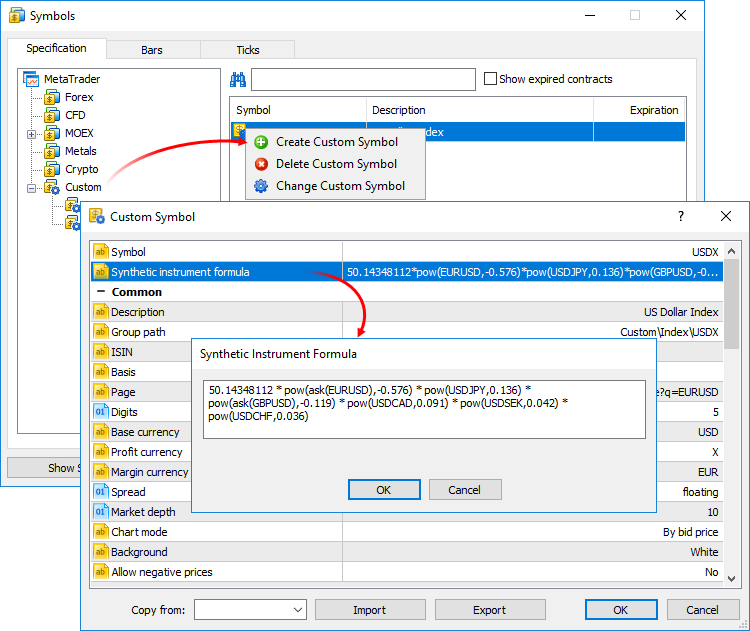
- Fixed synthetic symbol calculation errors, due to which data could be occasionally skipped.
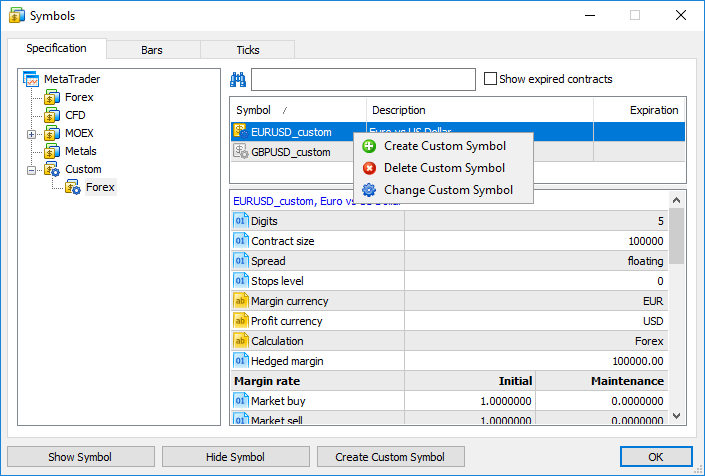
- When a custom symbol is deleted, files storing its tick and bar history are also deleted. This avoids the accumulation of unused data on the hard disk.
- Fixed display of search results on High DPI screens.
MQL5
- Implemented access to economic calendar data from MQL5 programs.
New functions
CalendarCountryById — gets country description by identifier.bool CalendarCountryById( const long country_id, // country ID MqlCalendarCountry& country // country description );
CalendarEventById — gets event description by identifier.bool CalendarEventById( const long event_id, // event ID MqlCalendarEvent& event // event description );
CalendarValueById — gets event value description by identifier.bool CalendarValueById( const long value_id, // value ID MqlCalendarValue& value // value description );
CalendarEventByCountry — gets the array of available events for the country.bool CalendarEventByCountry( string country_code, // country code MqlCalendarEvent& events[] // array of events );
CalendarEventByCurrency — gets the array of available events for the affected currency.bool CalendarEventByCurrency( string currency, // currency MqlCalendarEvent& events[] // array of events );
CalendarValueHistoryByEvent — gets the array of values for the specified time period, by event identifier.bool CalendarValueHistoryByEvent( ulong event_id, // event ID MqlCalendarValue& values[], // array of values datetime datetime_from, // period beginning date datetime datetime_to=0 // period end date );
CalendarValueHistory — gets the array of values for the specified time period for all events, filtered by country and/or currency.bool CalendarValueHistory( MqlCalendarValue& values[], // array of values datetime datetime_from, // beginning of period datetime datetime_to=0, // end of period string country_code=NULL, // country code string currency=NULL // currency );
CalendarValueLastByEvent — gets an array of last event values by identifier. This function enables the request of the values which have appeared since the previous request. The in/out parameter "change_id" is additionally used for this operation.
Every time the calendar database changes, the "change_id" property (the last change identifier) is updated. During data request, you specify "change_id" and the terminal returns events which appeared after that time, as well as the current "change_id" value, which can be used for the next request. During the first function call, specify the zero "change_id": the function will not return any events, but will return the current "change_id" for further requests.bool CalendarValueHistory( ulong event_id, // event ID ulong& change_id, // last calendar change ID MqlCalendarValue& values[] // array of values );
CalendarValueLast — gets the array of last values for all events, filtered by country and/or currency. This function enables the request of the values which have appeared since the previous request. Similarly to CalendarValueLastByEvent, the "change_id" property is used for the request.bool CalendarValueHistory( ulong event_id, // event ID ulong& change_id, // last calendar change ID MqlCalendarValue& values[], // array of values string country_code=NULL, // country code string currency=NULL // currency );
New structures
MqlCalendarCountry — country description.struct MqlCalendarCountry { ulong id; // country ID in ISO 3166-1 string name; // text name of the country string code; // code name of the country in ISO 3166-1 alpha-2 string currency; // country currency code string currency_symbol; // country currency symbol/sign string url_name; // country name used in URL on mql5.com };
MqlCalendarEvent — event description.struct MqlCalendarEvent { ulong id; // event ID ENUM_CALENDAR_EVENT_TYPE type; // event type ENUM_CALENDAR_EVENT_SECTOR sector; // sector to which the event belongs ENUM_CALENDAR_EVENT_FREQUENCY frequency; // event release frequency ENUM_CALENDAR_EVENT_TIMEMODE time_mode; // event release time mode ulong country_id; // country ID ENUM_CALENDAR_EVENT_UNIT unit; // unit for the event values ENUM_CALENDAR_EVENT_IMPORTANCE importance; // event importance ENUM_CALENDAR_EVENT_MULTIPLIER multiplier; // event importance multiplier uint digits; // number of decimal places in the event value string source_url; // source URL string event_code; // event code string name; // text name of the event in the terminal language };
MqlCalendarValue — event value description.struct MqlCalendarValue { ulong id; // value ID ulong event_id; // event ID datetime time; // event date and time datetime period; // period, for which the event is published int revision; // published indicator revision in relation to the reported period long actual_value; // current event value long prev_value; // previous event value long revised_prev_value; // revised previous event value long forecast_value; // forecast event value ENUM_CALENDAR_EVENT_IMPACRT impact_type; // potential impact on the currency rate };
New enumerationsenum ENUM_CALENDAR_EVENT_FREQUENCY { CALENDAR_FREQUENCY_NONE =0, // not used CALENDAR_FREQUENCY_WEEK =1, // weekly CALENDAR_FREQUENCY_MONTH =2, // monthly CALENDAR_FREQUENCY_QUARTER =3, // quarterly CALENDAR_FREQUENCY_YEAR =4, // yearly CALENDAR_FREQUENCY_DAY =5, // daily }; enum ENUM_CALENDAR_EVENT_TYPE { CALENDAR_TYPE_EVENT =0, // event (meeting, speech, etc.) CALENDAR_TYPE_INDICATOR =1, // indicator CALENDAR_TYPE_HOLIDAY =2, // holiday }; enum ENUM_CALENDAR_EVENT_SECTOR { CALENDAR_SECTOR_NONE =0, // no CALENDAR_SECTOR_MARKET =1, // market CALENDAR_SECTOR_GDP =2, // GDP CALENDAR_SECTOR_JOBS =3, // jobs CALENDAR_SECTOR_PRICES =4, // prices CALENDAR_SECTOR_MONEY =5, // money CALENDAR_SECTOR_TRADE =6, // trade CALENDAR_SECTOR_GOVERNMENT =7, // government CALENDAR_SECTOR_BUSINESS =8, // business CALENDAR_SECTOR_CONSUMER =9, // consumer CALENDAR_SECTOR_HOUSING =10, // housing CALENDAR_SECTOR_TAXES =11, // taxes CALENDAR_SECTOR_HOLIDAYS =12, // holidays }; enum ENUM_CALENDAR_EVENT_IMPORTANCE { CALENDAR_IMPORTANCE_NONE =0, // no CALENDAR_IMPORTANCE_LOW =1, // low CALENDAR_IMPORTANCE_MODERATE =2, // moderate CALENDAR_IMPORTANCE_HIGH =3, // high }; enum ENUM_CALENDAR_EVENT_UNIT { CALENDAR_UNIT_NONE =0, // no CALENDAR_UNIT_PERCENT =1, // percent CALENDAR_UNIT_CURRENCY =2, // national currency CALENDAR_UNIT_HOUR =3, // number of hours CALENDAR_UNIT_JOB =4, // number of jobs CALENDAR_UNIT_RIG =5, // number of rigs CALENDAR_UNIT_USD =6, // US dollar CALENDAR_UNIT_PEOPLE =7, // number of people CALENDAR_UNIT_MORTGAGE =8, // number of mortgages CALENDAR_UNIT_VOTE =9, // number of votes CALENDAR_UNIT_BARREL =10, // number of barrels CALENDAR_UNIT_CUBICFEET =11, // volume in cubic feet CALENDAR_UNIT_POSITION =12, // number of job positions CALENDAR_UNIT_BUILDING =13 // number of buildings }; enum ENUM_CALENDAR_EVENT_MULTIPLIER { CALENDAR_MULTIPLIER_NONE =0, // no CALENDAR_MULTIPLIER_THOUSANDS =1, // thousands CALENDAR_MULTIPLIER_MILLIONS =2, // millions CALENDAR_MULTIPLIER_BILLIONS =3, // billions CALENDAR_MULTIPLIER_TRILLIONS =4, // trillions }; enum ENUM_CALENDAR_EVENT_IMPACRT { CALENDAR_IMPACT_NA =0, // not available CALENDAR_IMPACT_POSITIVE =1, // positive CALENDAR_IMPACT_NEGATIVE =2, // negative }; enum ENUM_CALENDAR_EVENT_TIMEMODE { CALENDAR_TIMEMODE_DATETIME =0, // the source publishes the exact time CALENDAR_TIMEMODE_DATE =1, // the event takes the whole day CALENDAR_TIMEMODE_NOTIME =2, // the source does not publish the event time CALENDAR_TIMEMODE_TENTATIVE =3, // the source provides only date, but does not publish the exact time in advance, exact time is added when event occurs };
New error codesERR_CALENDAR_MORE_DATA =5400, // the array is too small for the whole result (values which fit in the array were passed) ERR_CALENDAR_TIMEOUT =5401, // timed out waiting for a response to the calendar data request ERR_CALENDAR_NO_DATA =5402, // data not found
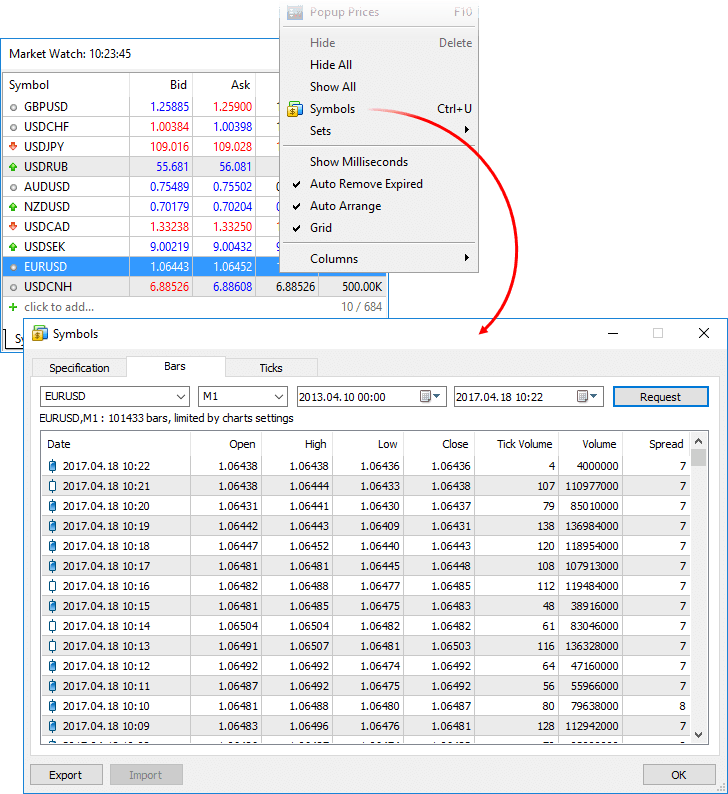
- Fixes and operation speed improvements related to tick and bar history.
- Fixes and significant operation speed improvements related to tick and bars history modification functions of custom trading symbols, CustomTicks* and CustomRates*.
- New data conversion functions.
CharArrayToStruct copies a uchar array to a POD structure.
bool CharArrayToStruct( void& struct_object, // structure const uchar& char_array[], // array uint start_pos=0 // starting position in the array );
StructToCharArray copies a POD structure to a uchar array.
bool StructToCharArray( const void& struct_object, // structure uchar& char_array[], // array uint start_pos=0 // starting position in the array );
- Added MathSwap function for changing byte order in ushort, uint and ulong values.
ushort MathSwap(ushort value); uint MathSwap(uint value); ulong MathSwap(ulong value);
- Added network functions for creating TCP connections to remote hosts via system sockets:
- SocketCreate creates a socket with specified flags and returns its handle
- SocketClose closes the socket
- SocketConnect connects to the server, with timeout control
- SocketIsConnected checks if the socket is currently connected
- SocketIsReadable gets the number of bytes which can be read from the socket
- SocketIsWritable checks if data writing to this socket is possible at the current time
- SocketTimeouts sets data receiving and sending timeouts for the system socket object
- SocketRead reads data from a socket
- SocketSend writes data to a socket
- SocketTlsHandshake initiates a secure TLS (SSL) connection with the specified host using the TLS Handshake protocol
- SocketTlsCertificate receives information concerning the certificate used for secure network connection
- SocketTlsRead reads data from a secure TLS connection
- SocketTlsReadAvailable reads all available data from a secure TLS connection
- SocketTlsSend sends data using a secure TLS connection
The address of the host, to which connection using network functions is established, must be explicitly added to the list of allowed addresses in terminal settings.
New error codes have been added for operations with network functions:
- ERR_NETSOCKET_INVALIDHANDLE (5270): invalid socket handle passed to the function
- ERR_NETSOCKET_TOO_MANY_OPENED (5271): too many sockets open (maximum 128)
- ERR_NETSOCKET_CANNOT_CONNECT (5272): error while connecting to remote host
- ERR_NETSOCKET_IO_ERROR (5273): error while sending/receiving data from the socket
- ERR_NETSOCKET_HANDSHAKE_FAILED (5274): secure connection establishment error (TLS Handshake)
- ERR_NETSOCKET_NO_CERTIFICATE (5275) — no data about certificate used for secure connection
- Added new functions for string operations:
StringReserve reserves for a string the memory buffer of the specified size.
bool StringReserve( string& string_var, // string uint new_capacity // buffer size for the string );
StringSetLength sets the specified string length in characters.
bool StringSetLength( string& string_var, // string uint new_length // new string length );
- Added new function for array operations:
ArrayRemove removes from an array the specified number of elements starting with the specified index.
bool ArrayRemove( void& array[], // array of any type uint start, // the index to start removal uint count=WHOLE_ARRAY // number of elements );
ArrayInsert inserts to a receiver array the specified number of elements from the source array, starting with the specified index.
bool ArrayInsert( void& dst_array[], // receiver array const void& src_array[], // source array uint dst_start, // index in the receiver array where to insert uint src_start=0, // index in the source array to start copying uint count=WHOLE_ARRAY // number of inserted elements );
ArrayReverse reverses in an array the specified number of elements starting with the specified index.
bool ArrayReverse( void& array[], // array of any type uint start=0, // index to start reversing uint count=WHOLE_ARRAY // number of elements );
- New "uint count" parameter has been added in functions CustomRatesUpdate, CustomRatesReplace, CustomTicksAdd and CustomTicksReplace. It allows specification of the number of elements of the passed array, which will be used for these functions. The WHOLE_ARRAY value is used for the parameter by default. It means that the whole array will be utilized.
- Added CustomBookAdd function to pass the status of the Depth of Market for a custom symbol. The function allows broadcasting the Depth of Market as if the prices arrive from a broker's server.
int CustomBookAdd( const string symbol, // symbol name const MqlBookInfo& books[] // an array with the DOM elements descriptions uint count=WHOLE_ARRAY // number of elements to be used );
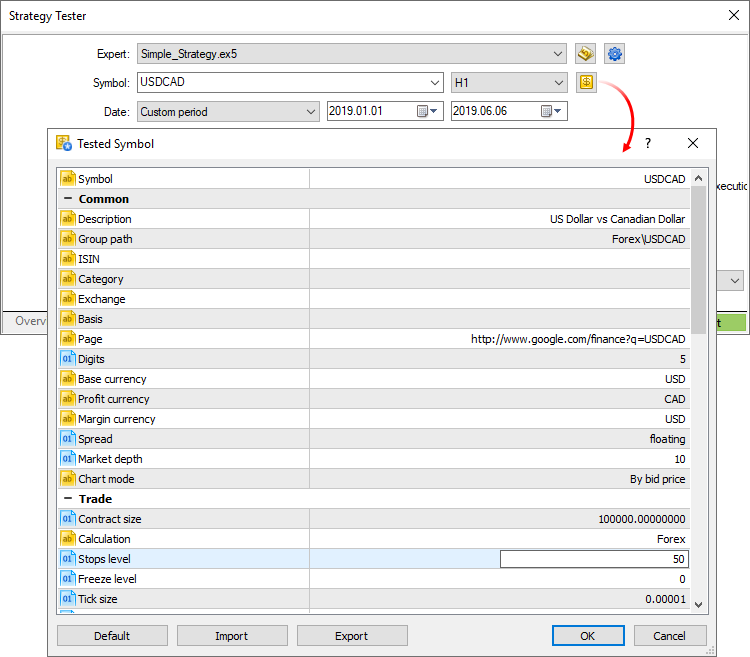
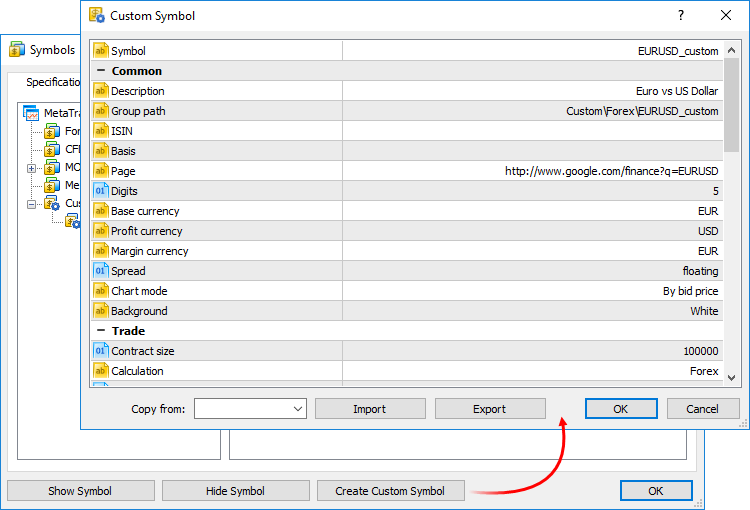
- Added CustomSymbolCreate function overloading. This allows the creation of a custom trading symbol based on an existing one. After creation, any symbol property can be edited using corresponding functions.
bool CustomSymbolCreate( const string symbol_name, // custom symbol name const string symbol_path="", // name of the group in which the symbol will be created const string symbol_origin=NULL // name of the symbol based on which the custom symbol will be created );
The name of the symbol, from which the properties of for the custom symbol should be copied, is specified in the "symbol_origin" parameter.
- The StringToTime function converting the string with date/time to a datetime value has been updated. Now it supports the following date formats:
- yyyy.mm.dd [hh:mi]
- yyyy.mm.dd [hh:mi:ss]
- yyyymmdd [hh:mi:ss]
- yyyymmdd [hhmiss]
- yyyy/mm/dd [hh:mi:ss]
- yyyy-mm-dd [hh:mi:ss]
- New TERMINAL_VPS property in the ENUM_TERMINAL_INFO_INTEGER enumeration; it shows that the terminal is running on the MetaTrader Virtual Hosting server (MetaTrader VPS). If an application is running on a hosting server, you can disable all its visual functions, since the virtual server does not have a graphical user interface.
- New SYMBOL_EXIST property in the ENUM_SYMBOL_INFO_INTEGER enumeration, means that the symbol under this name exists.
- Fixed typing when using template function pre-declarations.
- Added re-initialization of indicators when changing a trading account.
- Optimized StringSplit function.
- Fixed errors in the standard library operation.
Tester
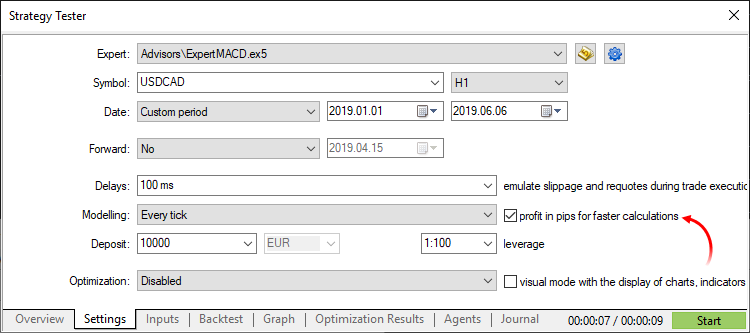
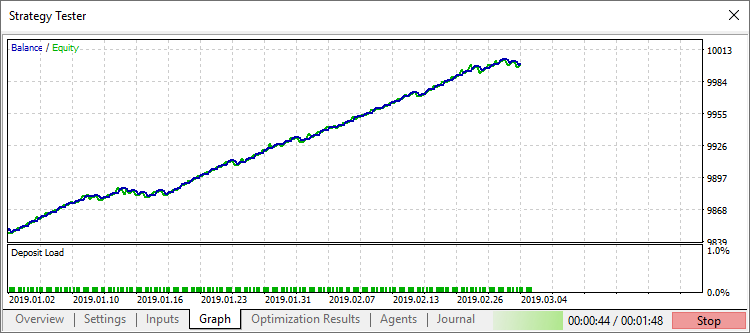
- Added TesterStop function — routine early shutdown of an Expert Advisor on a test agent. Now you can forcibly stop testing after reaching the specified number of losing trades, a preset drawdown level or any other criterion.
Testing completed using this function is considered successful. After the function call, the trading history obtained during testing and all trade statistics are passed to the terminal.
- Disabled ability to test and optimize Expert Advisors through MQL5 Cloud Network in the real tick mode. This mode can only be used on local agents and local network farms.
- Improved work with indicators during visual testing. Now the price chart and indicator lines are drawn synchronously, even for the maximum visualization speed.
- Optimized and significantly accelerated testing and optimization.
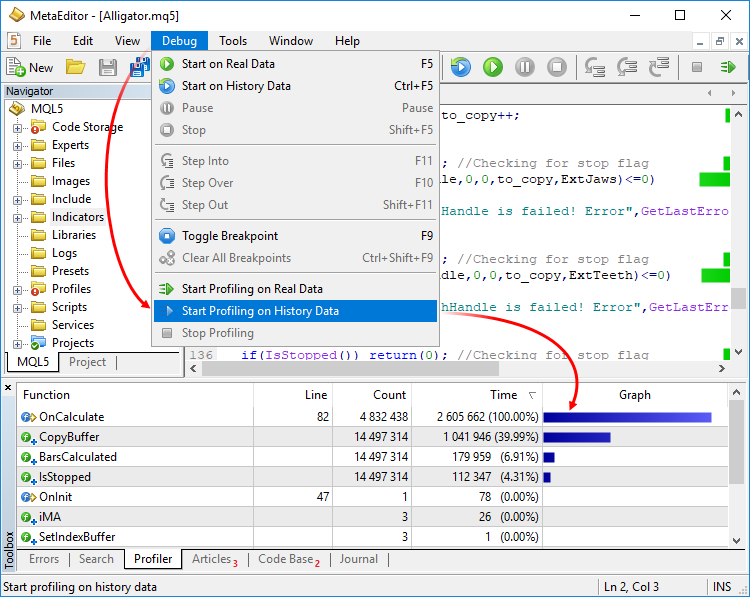
- Fixed debugging of indicators on historical data. Now the OnInit and OnDeinit indicator functions can be properly debugged.
- Implemented faster access to historical data when testing multicurrency Expert Advisors.
- Fixed occasional freezing of the visual tester during debugging on historical data.
- Implemented faster start of optimization passes when processing a task package by an agent.
- Changed policy of distributing task packages to testing agents. The package size has been increased and thus resource consumption on network operations has been significantly reduced.
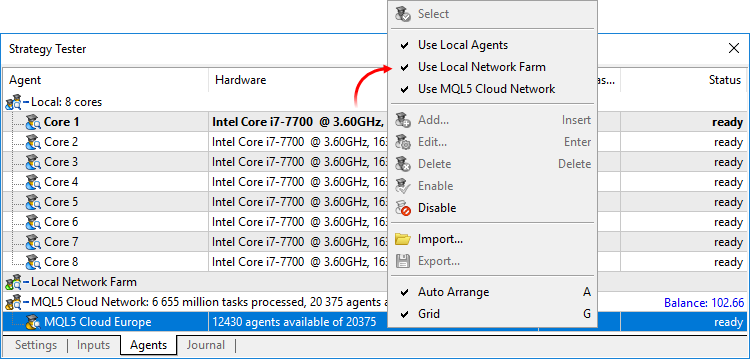
- Changed behavior of options enabling the use of local, network and cloud agents. Now, when you switch off the options, the agents complete processing of received tasks, while no more new tasks are given to them. In earlier versions, the behavior was similar to the "Disable" command, which immediately stopped agent operation.

MetaEditor
- Added support for non-ANSI characters in the debugger. Now, the expressions are properly displayed even if the variable name is specified in Cyrillic.
- Fixed display of search results on High DPI screens.
Added user interface translation into Croatian.
Documentation has been updated.